Symposium
The Georgetown Law Technology Review (GLTR) will host its biennial Symposium on Friday, January 30, 2026, at 500 First Street NW Floor 9 on the Georgetown Law campus. The day-long event will bring together scholars, practitioners, and advocates for a series of panels and a keynote discussion centered on this year’s theme, Data, Power, and Authoritarianism.
Data, Power, and Authoritarianism will explore how digital technologies, data-driven systems, and platform economies are shaping political and social life in the United States and beyond. Through conversations on data governance, labor, surveillance, and the public sphere, participants will examine how power is concentrated in digital systems and what legal, policy, and organizing strategies might help build more accountable and democratic technological infrastructures.
The Symposium is organized by Laythan Oweis, the Senior Symposium Editor of Georgetown Law Technology Review. Laythan’s vision, dedication, and passion for privacy law has made this Symposium possible, with the assistance of Charlotte Kim, the Editor-in-Chief, and GLTR’s faculty advisors—Mary Pat Dwyer, Julie Cohen, and Paul Ohm. We are also deeply grateful to Emily Tucker, the Executive Director of the Center on Privacy & Technology, whose incredible support and guidance were instrumental in the creation of this Symposium. Finally, we extend our sincere thanks to all our moderators and speakers, Symposium Editors, and the countless other individuals who have helped us.
Please RSVP here by January 28, 2026. There is a livestream option.

Symposium Programming
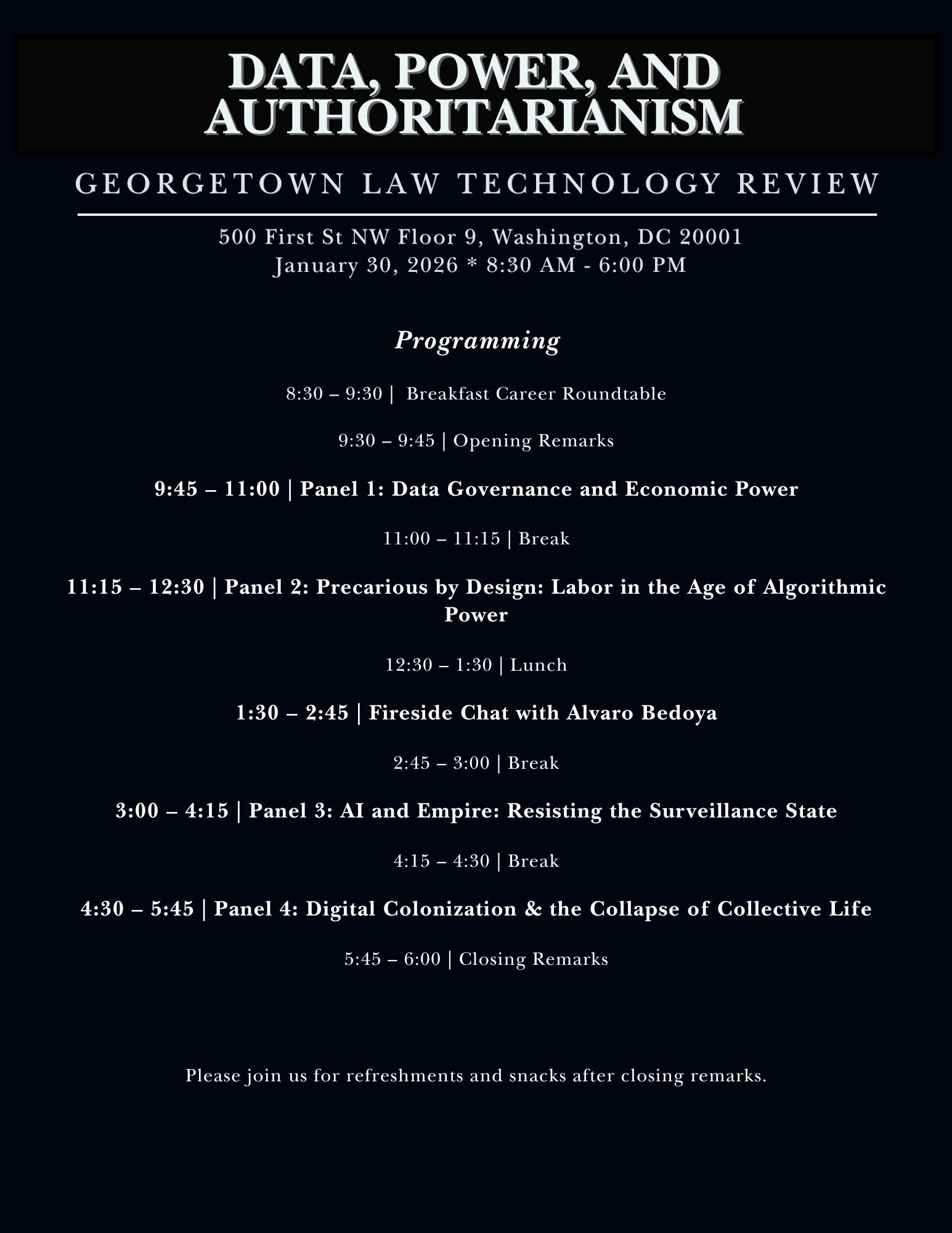
Fireside Chat
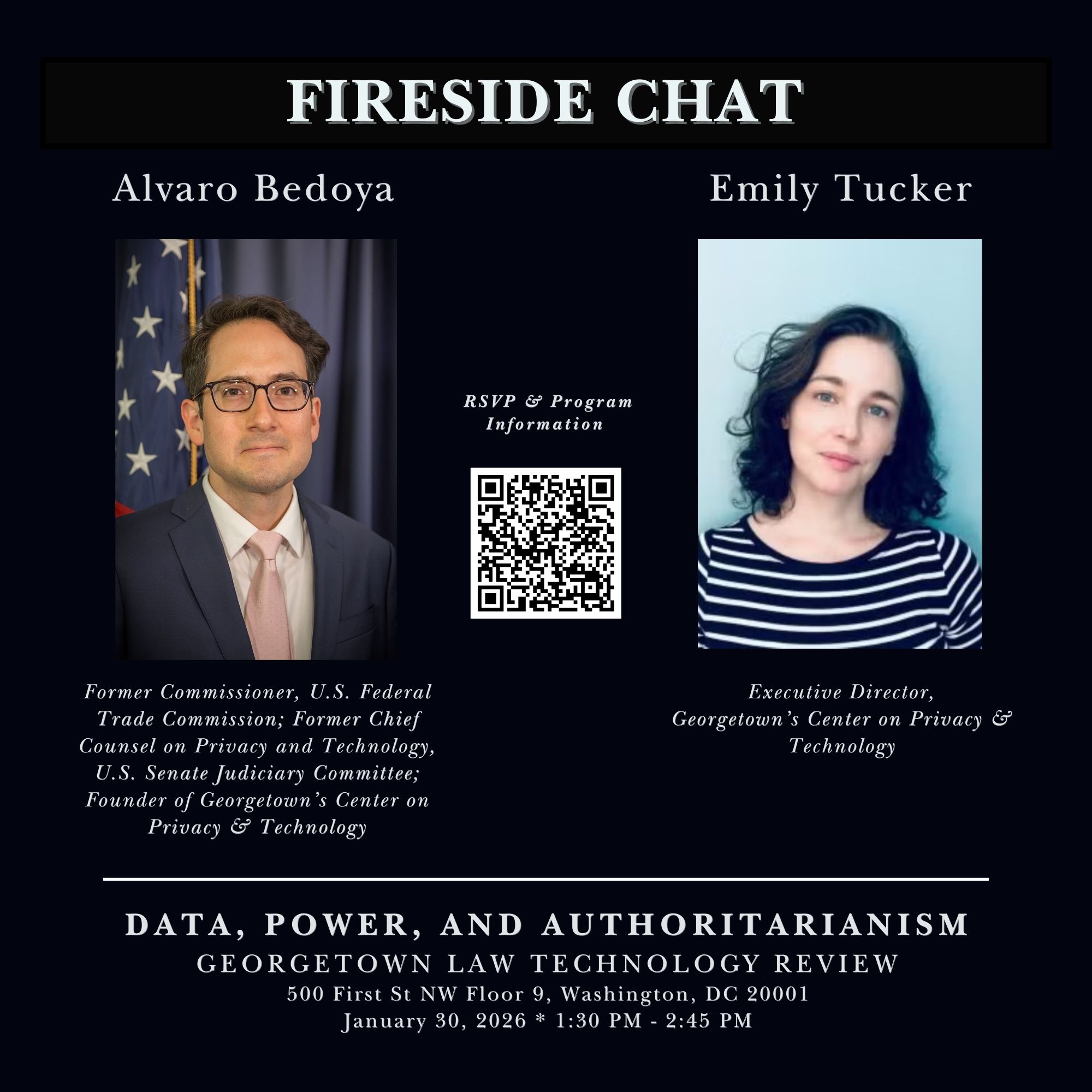
Career Roundtable Breakfast w/ WilmerHale

Panels
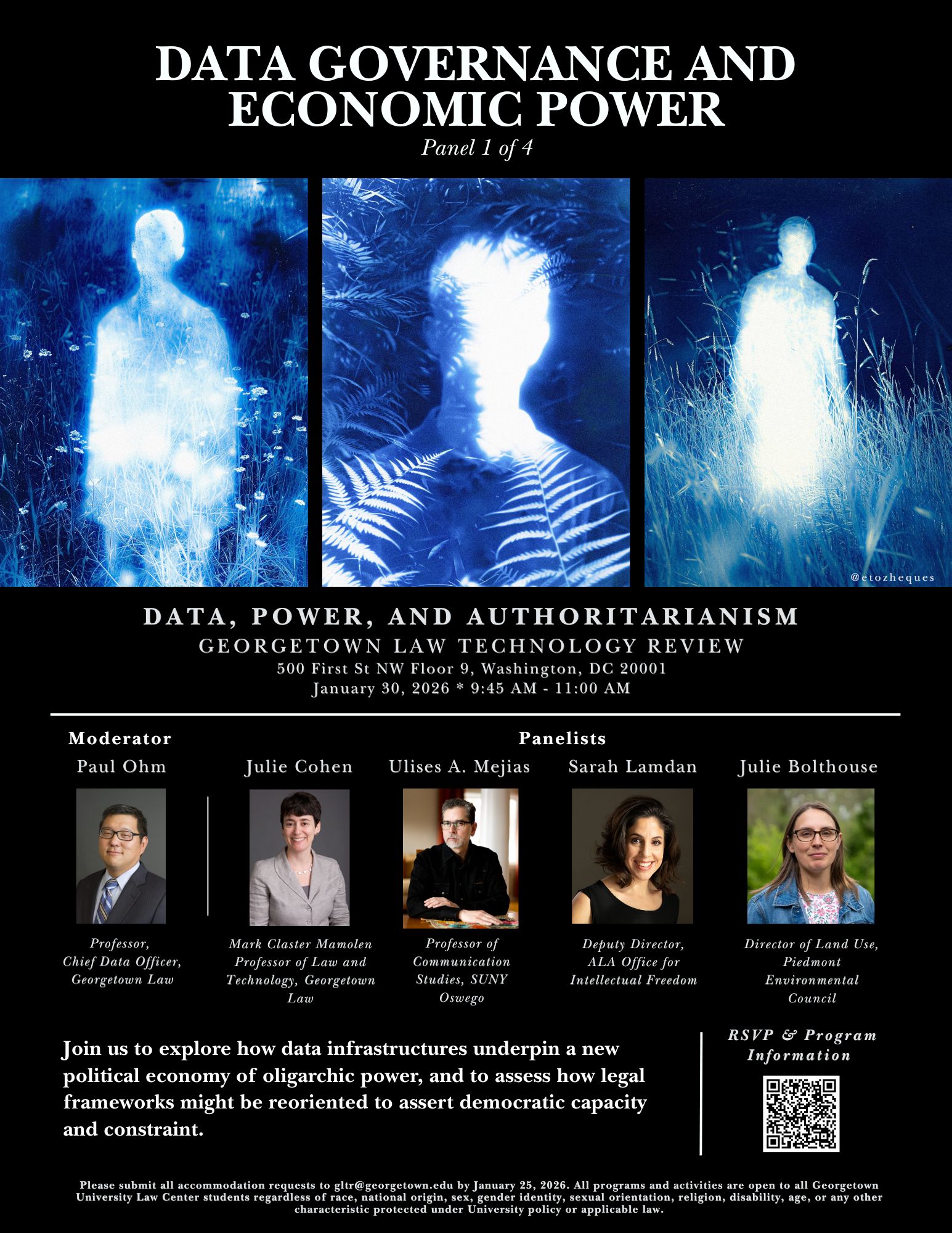
[Panel 1] Data Governance and Economic Power
This panel will examine how control over data has become a central mechanism through which economic and political power is consolidated in contemporary society. Moving beyond conventional framings of privacy, innovation, or market competition, panelists will approach data governance as a constitutional question—one that impacts sovereignty, democratic accountability, and our ecological future. Panelists will explore what democratic governance requires to meet the moment, how those systems might be reclaimed for collective self-determination, and what resistance already looks like in our own communities.
The following materials informed the development of Panel 1
Oligarchy, State, and Cryptopia by Julie Cohen
The Right Understands That All Governance Is Data Governance by Salomé Viljoen
DOGE Plan to Push AI Across the US Federal Government is Wildly Dangerous by Ben Green
Anatomy of an AI Coup by Eryk Salvaggio
Data Colonialism Comes Home To The US: Resistance Must Too by Nick Couldry & Ulises A. Mejias
How Big Tech Became Part of the State by Cédric Durand, Evgeny Morozov & Susan Watkins
Artificial Power: 2025 Landscape Report by AI Now Institute
Data Centers Are a Climate Enemy w/ Ketan Joshi by Tech Won’t Save Us
We All Suffer from OpenAI’s Pursuit of Scale w/ Karen Hao by Tech Won’t Save Us
Generative AI is Not Inevitable w/ Alex Hanna and Emily M. Bender by Tech Won’t Save Us
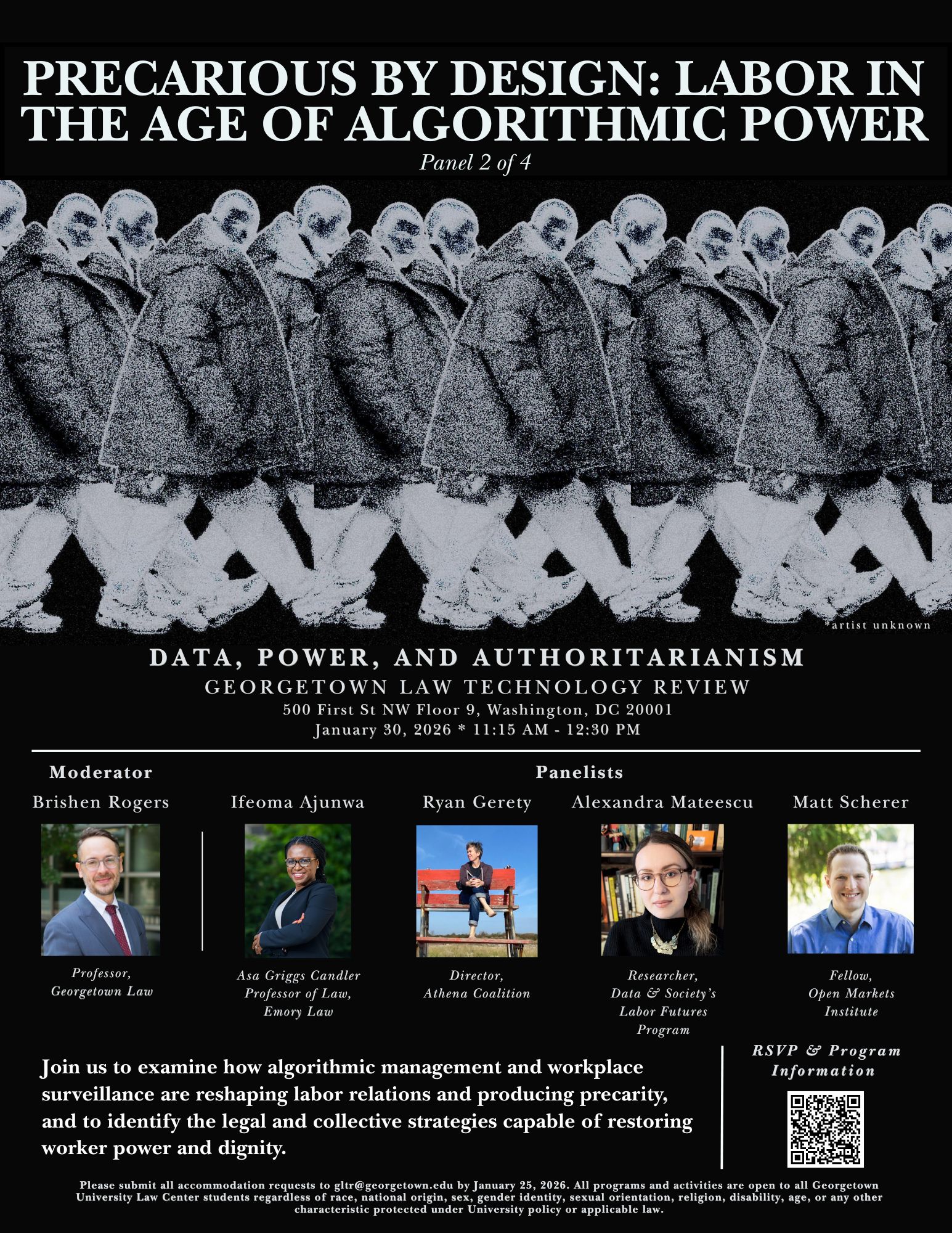
[Panel 2] Precarious by Design: Labor in the Age of Algorithmic Power
This panel will center labor as a key site where data extraction and algorithmic governance translate into lived experiences of control, instability, and dispossession. Panelists will explore how workplace technologies reconfigure power relations between workers and employers, obscure lines of accountability, and weaken collective organizing. The conversation will also explore emerging forms of resistance and legal reform, asking how labor law, unions, and democratic institutions might respond to restore worker dignity and collective power.
The following materials informed the development of Panel 2
AI, Gig Workers, and the Erosion of Democracies by Luca Belli
Algorithmic Management: Restraining Workplace Surveillance by AI Now Institute
How Major Labor Unions are Positioning on AI by Chris Mills Rodrigo
The Trump Administration’s Latest Assault on Workers by Sandeep Vaheesan & Alvaro Bedoya
Empowered Workers Are a Bulwark Against Illegal Monopoly by Stephen McMurtry
Considering Trump’s AI Plan and the Future It Portends by Justin Hendrix
Data and Algorithms at Work: The Case for Worker Technology Rights by Annette Bernhardt, Lisa Kresge & Reem Suleiman
Ifeoma Ajunwa on the Quantified Worker by Justin Hendrix
The Quantified Worker by Ifeoma Ajunwa
Data and Democracy at Work by Brishen Rogers
[Panel 3] AI & Empire: Resisting the Surveillance State
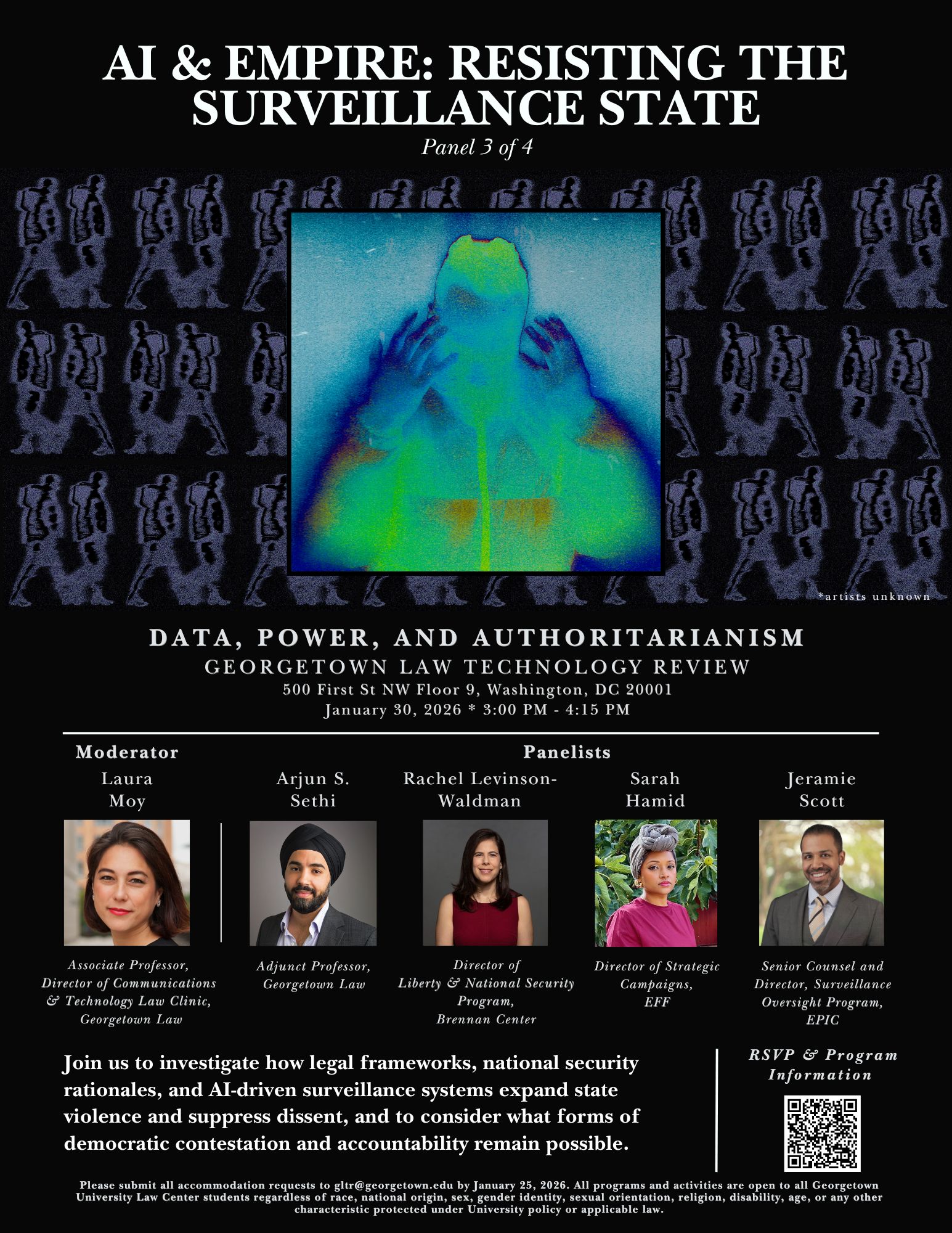
This panel will examine how AI-driven surveillance has become a central infrastructure of contemporary authoritarian governance, linking domestic policing, immigrant deportations, and political repression to broader projects of militarization and empire. Panelists will explore the deepening entanglement between technology corporations, security agencies, and the military-industrial complex, and how this paradigm union is eroding civil rights, due process, and democratic accountability. The conversation will also explore what it takes to confront surveillance as a governing strategy rather than a policy failure, and how collective alternatives grounded in justice, care, and democratic control might be built.
The following materials informed the development of Panel 3
Booming Military Spending on AI is a Windfall for Tech—and a Blow to Democracy by Brian J. Chen, Tina M. Park & Alex Pasternack
Republican Budget Bill Signals New Era in Federal Surveillance by Dean Jackson & Justin Hendrix
Big Tech is Powering Trump’s Immigration Crackdown by Ulises A. Mejias
Google Has Chosen a Side in Trump’s Mass Deportation Effort by Joseph Cox
Digitized Captivity: AI Surveillance and the Global Fabric of Policing by Susan Aboeid
The New Military Industry Complex w/ Sam Biddle by Tech Won’t Save Us
Campus Police Are Using Israeli Spy Tech to Crack Down on Student Protest by Tara Goodarzi & Brian Dolinar
Watched, Tracked, and Targeted – Life in Gaza under Israel’s All-Encompassing Surveillance Regime by Mohammed R. Mhawish
Artificial Intelligence and the Orchestration of Palestinian Life and Death by Sarah Fathallah
How the US Weaponizes Tech in the Middle East w/ Laleh Khalili by Tech Won’t Save Us
[Panel 4] Digital Colonization & the Collapse of Collective Life
This panel will explore how platform-mediated information infrastructures are hollowing out the conditions necessary for democratic life. Panelists will analyze how social media platforms fuel misinformation, harassment, and cynicism, weaken journalistic and civic institutions, and normalize forms of governance exercised through private platforms rather than democratic processes. The discussion asks what it would take to rebuild civic and informational infrastructure on democratic rather than commercial terms, and what dominant myths about technology must be abandoned to restore collective political imagination.
The following materials informed the development of Panel 4
Assessing the Relationship Between Information Ecosystems and Democracy’s Woes by Justin Hendrix
Tech Oligarchy Imperils Democratic Information Flows by Jamie Hancock
Weaponizing the Digital Influence Machine by Anthony Nadler, Matthew Crain & Joan Donovan
Meme Wars by Joan Donovan, Emily Dreyfuss & Brian Friedberg
Curating Cyberspace: Rights, Responsibilities, and Opportunities by Mary Anne Franks
Rethinking Speech Rights in the Era of Corporate Information Control by David McNeill
AI Is Supercharging the War on Libraries, Education, and Human Knowledge by Jason Koebler
What Google Zero Means for Journalism w/ Matt Pearce by Tech Won’t Save Us
How Political Power is Capturing Knowledge Systems and Manufacturing Structural Ignorance by Renée DiResta
Seeing the Digital Sphere: The Case for Public Platform Data by Leticia Bode & Peter Chapman
Better Access: Data for the Common Good by Knight-Georgetown Institute
Better Feeds: Algorithms That Put People First by Knight-Georgetown Institute

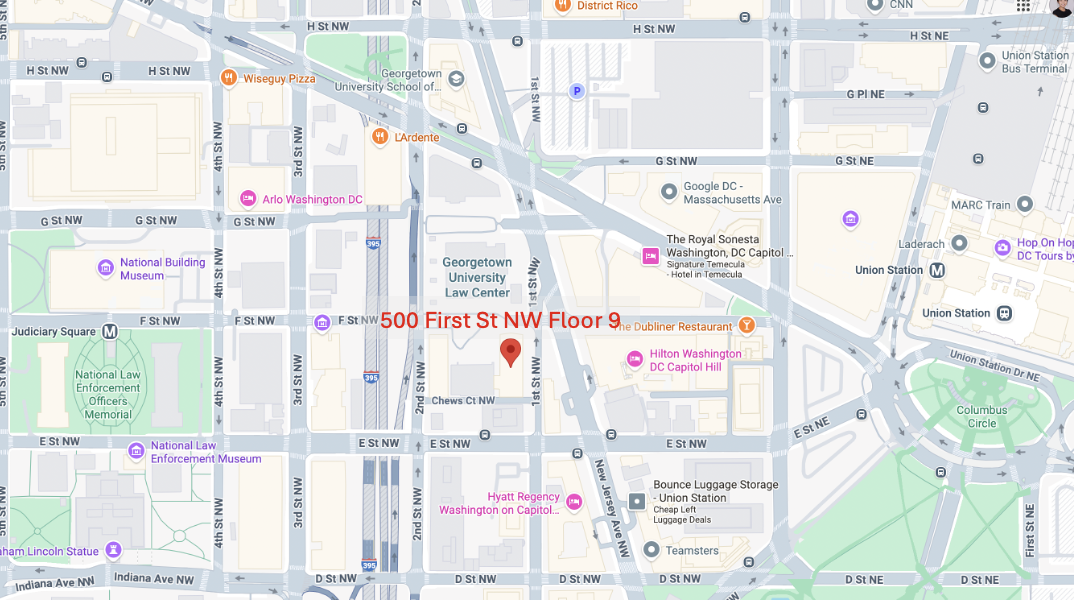
Map
500 First St NW is located on the corner of First St NW and E St NW, with the entrance on the First St NW side. The Symposium is held on Floor 9.